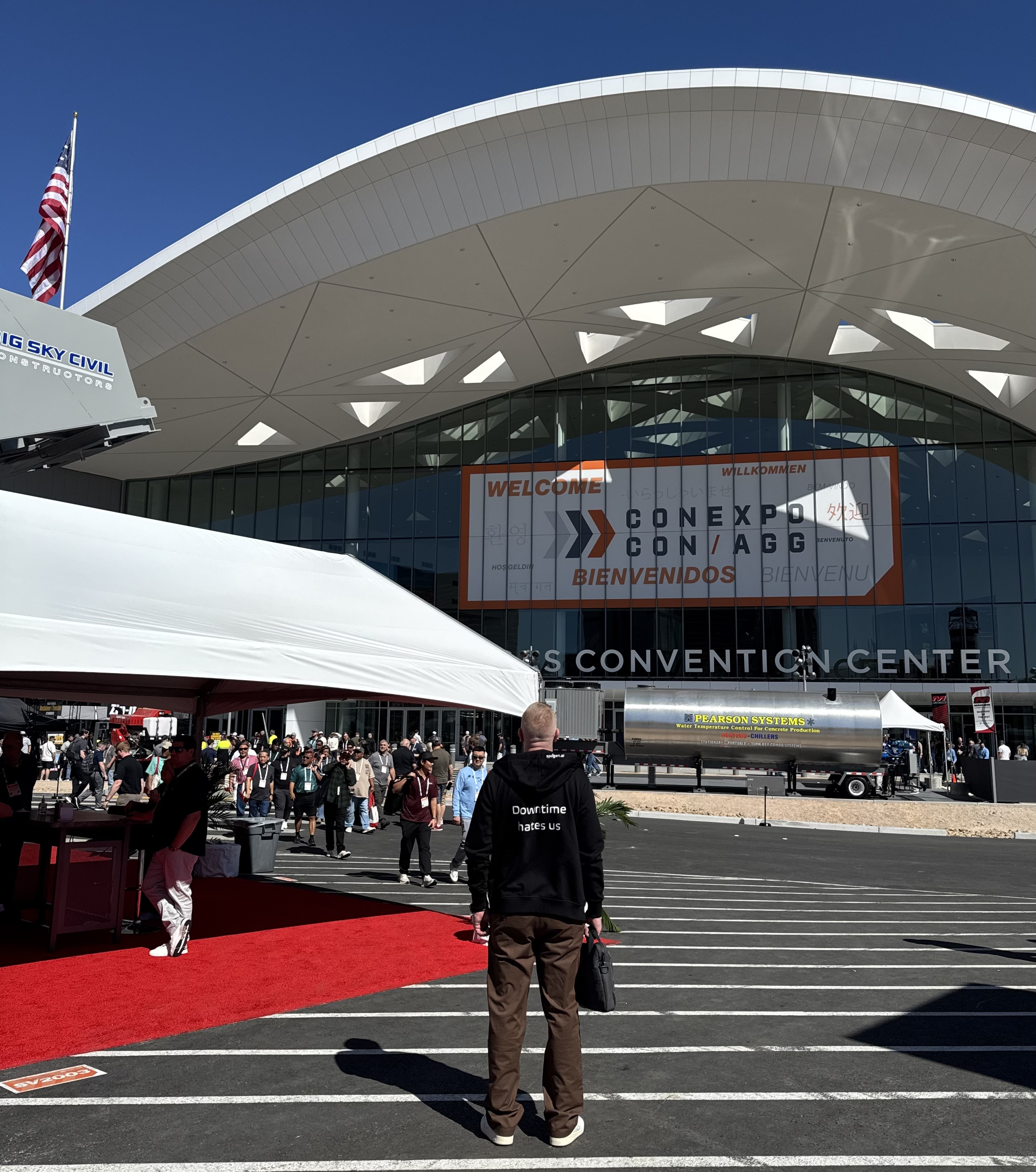
At CONEXPO-CON/AGG 2026, looking at the North American construction machinery market, one thing became clear.
An industry long characterized by a more mechanical, power-centric approach is now actively adopting software solutions and quickly moving toward using data in real workflows. This reflects the same direction we are seeing globally across machine-centric industries.
Together with software, AI is no longer a future concept. It is actively looked at in almost all companies, developed in many, and already rolled out by some. Applications range from user guidance and support to maintenance and fleet management.
Across the biggest players, you could see variations in how AI is being leveraged. Some leaned into diagnostics and quicker access to fleet information. Others focused on making documentation more accessible or enabling live operator guidance. The approaches differed, but the direction was consistent.
It’s no longer a niche shift, but a majority view.
The conversation has moved from “if” to “how ready”
In our discussions throughout the week, no one questioned whether this is the right direction. Most conversations were about readiness. How ready and structured their documentation is. Or how good or deep the telemetry data is to jump into. Basically, how quickly they could move from where they are today. Another recurring question was whether to build in-house, use a generic LLM, or take a more structured approach.
Machines have become more capable, but also more complex. Documentation keeps growing. Fault codes require interpretation. Data is available, but rarely usable in the moment and often just forgotten. At the same time, experienced operators and technicians are harder to find, and expectations for uptime continue to rise.
The traditional way of working, searching manuals, calling support, escalating issues, has reached its limits. What is emerging instead is the need for guidance that is available in the moment of need, during operation, diagnostics, and repair.
From interest to real demand
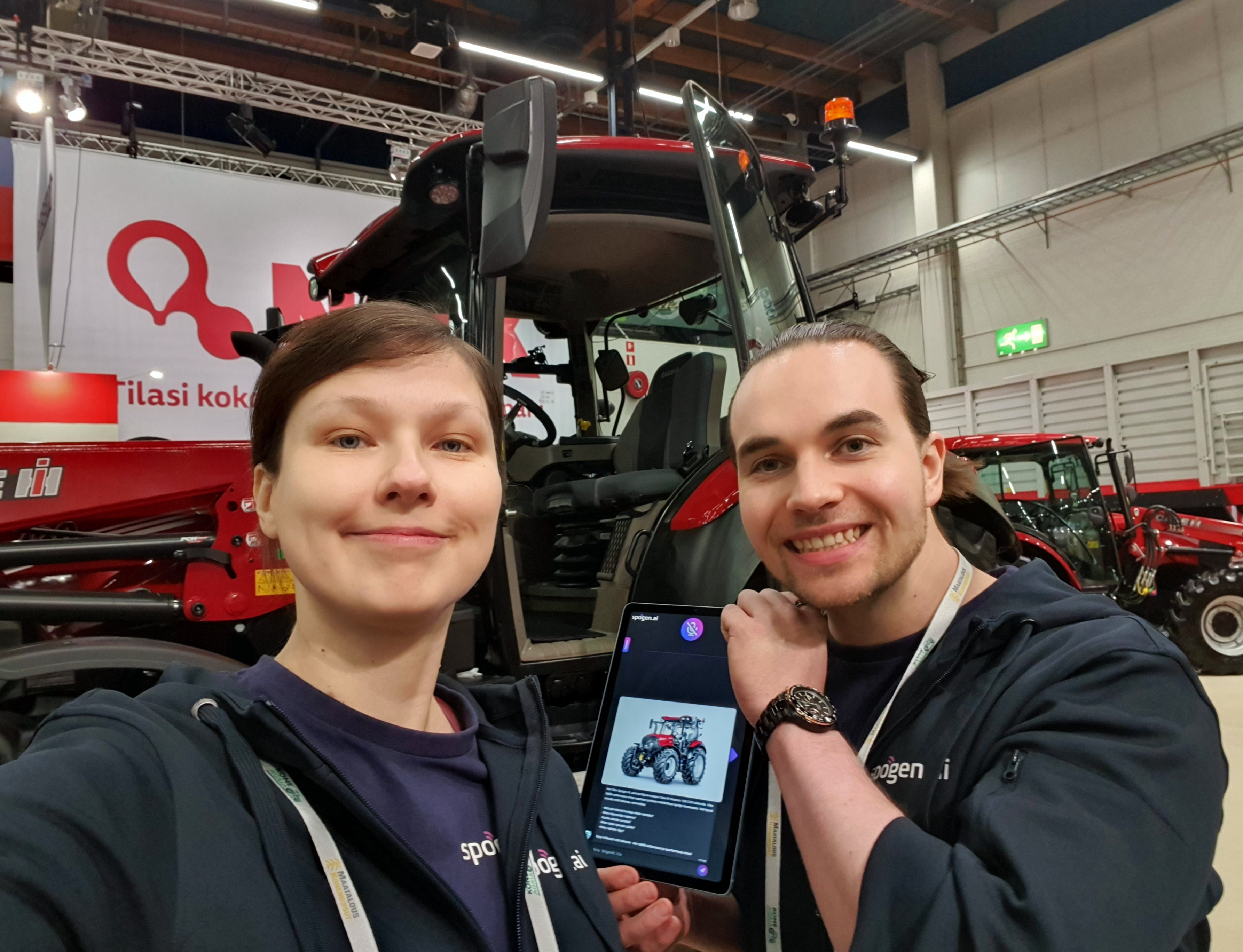
From our side, CONEXPO was a strong validation of this direction. The level of interest was high across the board, and the conversations were consistent. Teams are actively looking for ways to move forward with AI. For those already moving, the focus is on reaching production-level implementation.
At the same time, one pattern became clear.
Most solutions still focus on a single layer. Documentation search, diagnostics support, or operator help. All useful on their own, but often disconnected from the full workflow. When built on generic solutions, many also struggle with consistency, context handling, and staying on topic.
In practice, work does not happen in silos. A fault code leads to diagnostics. Diagnostics lead to maintenance or repair. The user moves across contexts, and the guidance needs to follow to remain accurate and effective.
Why a platform approach is becoming necessary
This is why we have taken a platform approach. There is a clear need to connect documentation, machine data, logs, and real workflows into one continuous layer of guidance. From operation to diagnostics to maintenance and repair.
Not separate tools, but one system that supports the full flow and can be built step by step if needed.
From differentiation to expectation
Right now, interactive guidance is still a way to stand out. It gets attention. It signals progress. It helps differentiate.
But based on what we saw at CONEXPO, this is changing quickly.
What is a differentiator today is moving toward becoming an expectation. Operators will expect guidance in the machine. Technicians will expect support when diagnosing issues. Service teams will expect faster answers without escalation.
The question is no longer whether this will happen, but how quickly companies can get there.
The build vs. buy reality
This is where the build versus buy decision becomes practical.
Building internally offers control, but it comes at a cost and also carries a crash-and-burn scenario. These systems require time, resources, and continuous development. Moving from a prototype to something that works reliably in daily operations is often underestimated.
Months turn into years. Costs grow. Meanwhile, the need in the field evolves, requiring adaptation while still building.
A ready-made platform changes that starting point. Instead of building from zero, you begin with a working, production-ready foundation that you can adapt to your machines, your data, and your workflows.
You still shape the solution to fit your business and ways of working, but you do not need to solve the entire problem from scratch.
In practice, this means getting to real use faster, with a more predictable path forward.
What this means in practice
CONEXPO made it clear that the realization is already forming across the industry. AI in machinery is not about adding another feature, but about changing how people interact with complex equipment in their daily work.
The companies that move forward fastest will be the ones who turn that realization into something practical. Not just systems that exist, but systems that are used in the field, improving diagnostics, guiding repairs, and reducing the load on support.